
Holyoke Family Genealogy - Person Sheet
Holyoke Family Genealogy - Person Sheet
NameAnn TAYLOR  2, F
2, F
2, FBirthabt 1593, Barnwell, Northamptonshire, England2
Death17 Apr 1673, Ipswich, Essex, MA
Baptism28 Oct 1593, Barnwell, St. Andrew, Northampton, England
FatherThomas TAYLOR , M
MotherAgnes ??? , F
Spouses
1Richard TUTTLE , M
, MBirthabt 1593, Ringstead, Northamptonshire, England
Death8 May 1640, Boston, Suffolk, MA
FatherSimon TUTTLE , M (~1560-)
MotherIsabel WELLS , F (~1565-)
Family ID127
Marriage19 Jun 1622, Barnwell, St. Andrew, Northampton, England
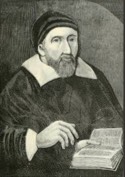

Birthabt 1585, Alcester Parish, Tanworth, Warwickshire, England2
Christening15 Feb 1585, Alcester Parish, Tanworth, Warwickshire, England
Death4 May 1660, Rumney Marsh, Suffolk, MA
BurialRumney Marsh Burial Grounds; Rumney Marsh, Suffolk, MA
Baptism15 Feb 1585, Alcester Parish, Tanworth, Warwickshire, England3
FatherJohn HOLYOKE the Elder , M (~1552-~1587)
MotherElizabeth STOKES , F (~1562-~1615)
Family ID5
Marriageabt 1648, Boston, Suffolk, MA
Notes for Ann TAYLOR
• First name also spelled as “Anne”
• Also known as the widow “Tuttle”
• Some records lists her year of birth as “1594” and her birth place as “Tanworth-in-Arden, Warwickshire, England”
• Mother-in-Law to Edward HOLYOKE's daughter Mary.
• She boarded the “Truelove” on Jun 1635 with brothers James, and William, as well as her husband Richard, emigrating to the Boston/Lynn area … although some records has her as a passenger of the “Planter” in 1635.
[S:9 page 19]
• Also known as the widow “Tuttle”
• Some records lists her year of birth as “1594” and her birth place as “Tanworth-in-Arden, Warwickshire, England”
• Mother-in-Law to Edward HOLYOKE's daughter Mary.
• She boarded the “Truelove” on Jun 1635 with brothers James, and William, as well as her husband Richard, emigrating to the Boston/Lynn area … although some records has her as a passenger of the “Planter” in 1635.
[S:9 page 19]
Notes for Richard (Spouse 1)
• The Planter sailed from London April 2 or 11, 1635, arriving at Boston June 7, 1635 … Master Nicolas Travice, Voyage of 1635 …
Roll Order:
Tuttle, Richard 32, husbandman of Ringstead, Hereford
Tuttle, Anne 41, wife
Tuttle, Anne 12
Tuttle, John 10
Tuttle, Rebecca 6
Tuttle, Isabel 70 (Richard’s mother)
Roll Order:
Tuttle, Richard 32, husbandman of Ringstead, Hereford
Tuttle, Anne 41, wife
Tuttle, Anne 12
Tuttle, John 10
Tuttle, Rebecca 6
Tuttle, Isabel 70 (Richard’s mother)
Notes for Edward (Spouse 2)
• Edward’s surname has also been spelled as “Holliocke, Holliock, Holiocke, Holiock or Holyocke,” however, he signed his will and other documents with “Holyoke.” That being said, there are documents, with his surname being spelled in several different ways. Time periods prior to the mid-1600’s, many writers relied on the phonetic / pronunciation when they transcribed or created document because literacy rate of most people of the time was quite low.
• The surname HOLYOKE and all of its variant forms seem to be derived from the holy oak, or gospel oak, an archaic term for a boundary tree. In Anglo-Saxon it is ““hálig āc” (Holy Oak)
• Edward was educated (because he could read and write) and most likely fairly affluent … at the age of five, he was named as Chief Heir in the will of his great uncle, Edward Holyoke, who bequeathed to him properties in “… Tanworth, Wooton Wawen, Ullenhall, and Henly” … and his uncle Edward is thought to be the same "Edward Hollyocke " mentioned in the Will of Richard Hathaway, the father of Ann Hathaway, the wife of William Shakespeare,.
• Based on his son’s Christening record, Edward was living in London in 1607 and his occupation is listed as that of a grocer, although some records suspected he was also educated in London. Given his later occupancy, Edward most likely had some legal training prior to coming to the colonies. He does not appear in the Oxford or Cambridge University Registers, which leads to the possibility that he studied at one of London’s Inns of Court. The Inns of Court in London was the professional associations for barristers in England and Wales. There are four Inns of Court: Gray's Inn, Lincoln's Inn, Inner Temple and Middle Temple.
• Prudence (also from Tanworth, Warwickshire) joined Edward in London after their marriage in 1612 … by some accounts they’ve known each other before Edward went to London.
• The family (Edward, Prudence and their first four children) left London about 1620 and returned to Tanworth, Warwickshire, England … perhaps living on the property his uncle Edward had left him (see above).
• Edward was an agent of Lord Brooke (Robert Grenville) of Warwick Castle. Edward managed the affairs around land / property owned by Lord Brooke, and later would include the properties of William Fiennes (who would become Lord Saye). Lord Brooke held properties in England as well as in the colonies and apparently Edward managed all these properties … which is probably why he moved to the colonies.
• Edward and his son Elizur left for the colonies, most likely soon after the death of Edward’s first son (John) in 1635. So, it is assumed Edward and Elizur came to the colonies somewhere around 1635, however, there are no records of how Edward & Elizur were transported to the colonies. There are, however, references that assumed that since Edward was an Agent of Lord Brooke and Lord Saye, Edward & Elizur may come in one of the private ships owned by Lord Brooke and/or William Fiennes (Lord Saye).
• Edward either brought, or sent for the rest of his family sometime later, maybe late 1636 or early 1637. Given there are no records of ship passage for the family, again, it has been assumed they came by way of a ship owned by Lord Brooke and/or William Fiennes.
• In 1637, land records indicate they moved from Lynn, MA to Rumney Marsh (which is now called Chelsea, MA) … he is recorded as a farmer with five hundred acres of land … which was granted to him by the town of Lynn in 1638 (Lord Brooke also received 800 acre). Edward later owned land in Reading and Nahant, MA. By 1656, he owned land on the western side of Sagamore Hill in Lynn, MA “… , surrounded by willows, is the well known Holyoke spring.” … This spring is near the western margin of the meadow lying immediately north of Holyoke street, and west of Walnut, formerly known as Pan Swamp.
• On 13 March 1638, the Massachusetts General Court empowered Edward to manage the lands of Lord Brooke until Lord Brooke disposes of it.
• One record implies that Edward was involved (through he standing within the General Court) in the founding/naming of Harvard (originally in 1636 was called “New College”) - which at the time was a school for training Calvinist ministers. One record mentions he was one of its very first Tutors (instructor) in about 1637. Edward was then succeeded by Rev. Henry Dunster in 1639.
• Despite popular opinion, John Harvard did not found Harvard … he was the first major benefactor of the college and he donated half of his estate and his library of more than 400 books to the School. Because of John Harvard’s bequest, the Great and General Court in Oct 1639 ordered “that the college agreed upon formerly to be built at Cambridge shall be called Harvard College” and in 1640 Dunster would become Harvard’s first President.
• Edward was a member of the Quarterly Court from 1639 to 1643, and again in 1647 to 1648. He was a representative in ten sessions of the General Court. In 1641/42, he sat on the General Court with Col. Endecot (regarded as one of the Fathers of New England, who would later become the longest serving governor of the Massachusetts Bay Colony), in addition to Mr. Emanuel Downing, Mr. William Hawthorne and Mr. Thomas Willis.
• Edward became a Massachusetts Colony Freeman on 14 March 1639 which entitled him to be a member of the General Court.
• While records show he managed the estate of Lord Brooke, he was also an auditor of an account between Mr. William Woodcock of London and Mr. William Browne of Salem, Essex, MA. and was an agent for Francis Webb of London (June 1643), suggesting he may have traveled back and forth between England and the Massachusetts Colony.
• Edward’s second marriage (abt. 1648) was to Ann Taylor … Ann was the mother-in-law to Edward’s 4th daughter, Mary.
• On 8 Sep 1648, Edward sold to Richard Woodward of Watertown “… the windmill that is standing in Boston ... as also the land whereon it doth stand ...”
• In 1650, Edward became the Deputy of Springfield (some records says he was the Warden of Springfield), although he apparently was not a resident there … so it’s most likely this appointment was due to his son, Elizur’s good standing in that community that got Edward the position. There is, however, one record 11 that states he did move to Springfield in about 1650, while another record12 had doubted that account.
• Edward wrote and published at least three books … (1) Doctrine of Life; Mans Redemtion by the Seed of Eve, (2) The Seed of Abraham, and (3) The Seed of Eve. Printed by T.R. for Nath Ekins, London, 1658.
• When Edward died, Elizur HOLYOKE (abt 1617 - 1676) was his only living son.
• Some records claim that Edward HOLYOKE founded one of the most prominent families in the early history of Massachusetts.
Side Note:
• Edward and Prudence Holyoke, by way of their daughters – Ann, who married Lt. Thomas Putnam, and Sarah, who married Corporal John Andrews, are the ancestors of (just to name a few):
• Wallace Rider Farrington, 6th Territorial Governor of Hawaii (6 great-grandson)
• William Taft, 27th U.S presidents, (7 great-grandson)
• Herbert Hoover, 31st U.S President (8 great-grandson)
• Willis Carrier, Inventor of Air Conditioning (7 great-grandson)
• Bette Davis, Actress (8 great-granddaughter)
• Zack Snyder, Film Maker (9 great-grandson)
• Bill Belichick, NFL Head Coach (10 great-grandson)
• Bob Taft, 67th Governor of Ohio (10 great-grandson)
• Mark and Donnie Wahlberg, Singers - Actors (11 great-grandsons)
Sources:
See NEGHR 147:21 (January, 1993)13
[S:2], [S:14], [S:92], [S:9], [S:52], [S:235]14, [S:255]
• The surname HOLYOKE and all of its variant forms seem to be derived from the holy oak, or gospel oak, an archaic term for a boundary tree. In Anglo-Saxon it is ““hálig āc” (Holy Oak)
• Edward was educated (because he could read and write) and most likely fairly affluent … at the age of five, he was named as Chief Heir in the will of his great uncle, Edward Holyoke, who bequeathed to him properties in “… Tanworth, Wooton Wawen, Ullenhall, and Henly” … and his uncle Edward is thought to be the same "Edward Hollyocke " mentioned in the Will of Richard Hathaway, the father of Ann Hathaway, the wife of William Shakespeare,.
• Based on his son’s Christening record, Edward was living in London in 1607 and his occupation is listed as that of a grocer, although some records suspected he was also educated in London. Given his later occupancy, Edward most likely had some legal training prior to coming to the colonies. He does not appear in the Oxford or Cambridge University Registers, which leads to the possibility that he studied at one of London’s Inns of Court. The Inns of Court in London was the professional associations for barristers in England and Wales. There are four Inns of Court: Gray's Inn, Lincoln's Inn, Inner Temple and Middle Temple.
• Prudence (also from Tanworth, Warwickshire) joined Edward in London after their marriage in 1612 … by some accounts they’ve known each other before Edward went to London.
• The family (Edward, Prudence and their first four children) left London about 1620 and returned to Tanworth, Warwickshire, England … perhaps living on the property his uncle Edward had left him (see above).
• Edward was an agent of Lord Brooke (Robert Grenville) of Warwick Castle. Edward managed the affairs around land / property owned by Lord Brooke, and later would include the properties of William Fiennes (who would become Lord Saye). Lord Brooke held properties in England as well as in the colonies and apparently Edward managed all these properties … which is probably why he moved to the colonies.
• Edward and his son Elizur left for the colonies, most likely soon after the death of Edward’s first son (John) in 1635. So, it is assumed Edward and Elizur came to the colonies somewhere around 1635, however, there are no records of how Edward & Elizur were transported to the colonies. There are, however, references that assumed that since Edward was an Agent of Lord Brooke and Lord Saye, Edward & Elizur may come in one of the private ships owned by Lord Brooke and/or William Fiennes (Lord Saye).
• Edward either brought, or sent for the rest of his family sometime later, maybe late 1636 or early 1637. Given there are no records of ship passage for the family, again, it has been assumed they came by way of a ship owned by Lord Brooke and/or William Fiennes.
• In 1637, land records indicate they moved from Lynn, MA to Rumney Marsh (which is now called Chelsea, MA) … he is recorded as a farmer with five hundred acres of land … which was granted to him by the town of Lynn in 1638 (Lord Brooke also received 800 acre). Edward later owned land in Reading and Nahant, MA. By 1656, he owned land on the western side of Sagamore Hill in Lynn, MA “… , surrounded by willows, is the well known Holyoke spring.” … This spring is near the western margin of the meadow lying immediately north of Holyoke street, and west of Walnut, formerly known as Pan Swamp.
• On 13 March 1638, the Massachusetts General Court empowered Edward to manage the lands of Lord Brooke until Lord Brooke disposes of it.
• One record implies that Edward was involved (through he standing within the General Court) in the founding/naming of Harvard (originally in 1636 was called “New College”) - which at the time was a school for training Calvinist ministers. One record mentions he was one of its very first Tutors (instructor) in about 1637. Edward was then succeeded by Rev. Henry Dunster in 1639.
• Despite popular opinion, John Harvard did not found Harvard … he was the first major benefactor of the college and he donated half of his estate and his library of more than 400 books to the School. Because of John Harvard’s bequest, the Great and General Court in Oct 1639 ordered “that the college agreed upon formerly to be built at Cambridge shall be called Harvard College” and in 1640 Dunster would become Harvard’s first President.
• Edward was a member of the Quarterly Court from 1639 to 1643, and again in 1647 to 1648. He was a representative in ten sessions of the General Court. In 1641/42, he sat on the General Court with Col. Endecot (regarded as one of the Fathers of New England, who would later become the longest serving governor of the Massachusetts Bay Colony), in addition to Mr. Emanuel Downing, Mr. William Hawthorne and Mr. Thomas Willis.
• Edward became a Massachusetts Colony Freeman on 14 March 1639 which entitled him to be a member of the General Court.
• While records show he managed the estate of Lord Brooke, he was also an auditor of an account between Mr. William Woodcock of London and Mr. William Browne of Salem, Essex, MA. and was an agent for Francis Webb of London (June 1643), suggesting he may have traveled back and forth between England and the Massachusetts Colony.
• Edward’s second marriage (abt. 1648) was to Ann Taylor … Ann was the mother-in-law to Edward’s 4th daughter, Mary.
• On 8 Sep 1648, Edward sold to Richard Woodward of Watertown “… the windmill that is standing in Boston ... as also the land whereon it doth stand ...”
• In 1650, Edward became the Deputy of Springfield (some records says he was the Warden of Springfield), although he apparently was not a resident there … so it’s most likely this appointment was due to his son, Elizur’s good standing in that community that got Edward the position. There is, however, one record 11 that states he did move to Springfield in about 1650, while another record12 had doubted that account.
• Edward wrote and published at least three books … (1) Doctrine of Life; Mans Redemtion by the Seed of Eve, (2) The Seed of Abraham, and (3) The Seed of Eve. Printed by T.R. for Nath Ekins, London, 1658.
• When Edward died, Elizur HOLYOKE (abt 1617 - 1676) was his only living son.
• Some records claim that Edward HOLYOKE founded one of the most prominent families in the early history of Massachusetts.
Side Note:
• Edward and Prudence Holyoke, by way of their daughters – Ann, who married Lt. Thomas Putnam, and Sarah, who married Corporal John Andrews, are the ancestors of (just to name a few):
• Wallace Rider Farrington, 6th Territorial Governor of Hawaii (6 great-grandson)
• William Taft, 27th U.S presidents, (7 great-grandson)
• Herbert Hoover, 31st U.S President (8 great-grandson)
• Willis Carrier, Inventor of Air Conditioning (7 great-grandson)
• Bette Davis, Actress (8 great-granddaughter)
• Zack Snyder, Film Maker (9 great-grandson)
• Bill Belichick, NFL Head Coach (10 great-grandson)
• Bob Taft, 67th Governor of Ohio (10 great-grandson)
• Mark and Donnie Wahlberg, Singers - Actors (11 great-grandsons)
Sources:
See NEGHR 147:21 (January, 1993)13
[S:2], [S:14], [S:92], [S:9], [S:52], [S:235]14, [S:255]